Why React is the Future of Web Development:

The landscape of web development is constantly evolving, with new frameworks and technologies emerging regularly. However, one JavaScript library has consistently maintained its position at the forefront of modern web development: React. As we look toward 2025 and beyond, React continues to demonstrate why it's not just a current trend, but the future of web development itself.
In this comprehensive analysis, we'll explore the compelling reasons why React is positioned to dominate the web development landscape, examine its latest innovations, and understand how it's shaping the future of how we build web applications.
The Current State of React in 2025
React has evolved far beyond its humble beginnings as a simple UI library. Today, it powers millions of websites and applications, from small startups to tech giants like Facebook, Netflix, and Airbnb. The numbers speak for themselves: React is used by over 42% of software developers worldwide, making it the most popular frontend framework in the developer ecosystem.
What sets React apart in the current web development trends 2025 is its ability to adapt and innovate while maintaining backward compatibility. This balance between innovation and stability has made React the go-to choice for developers and organizations looking to build scalable, maintainable web applications.
React vs Other Frameworks 2025: Why React Leads the Pack
When comparing React vs other frameworks 2025, several key advantages emerge that position React as the clear leader:
Component Reusability and Modularity
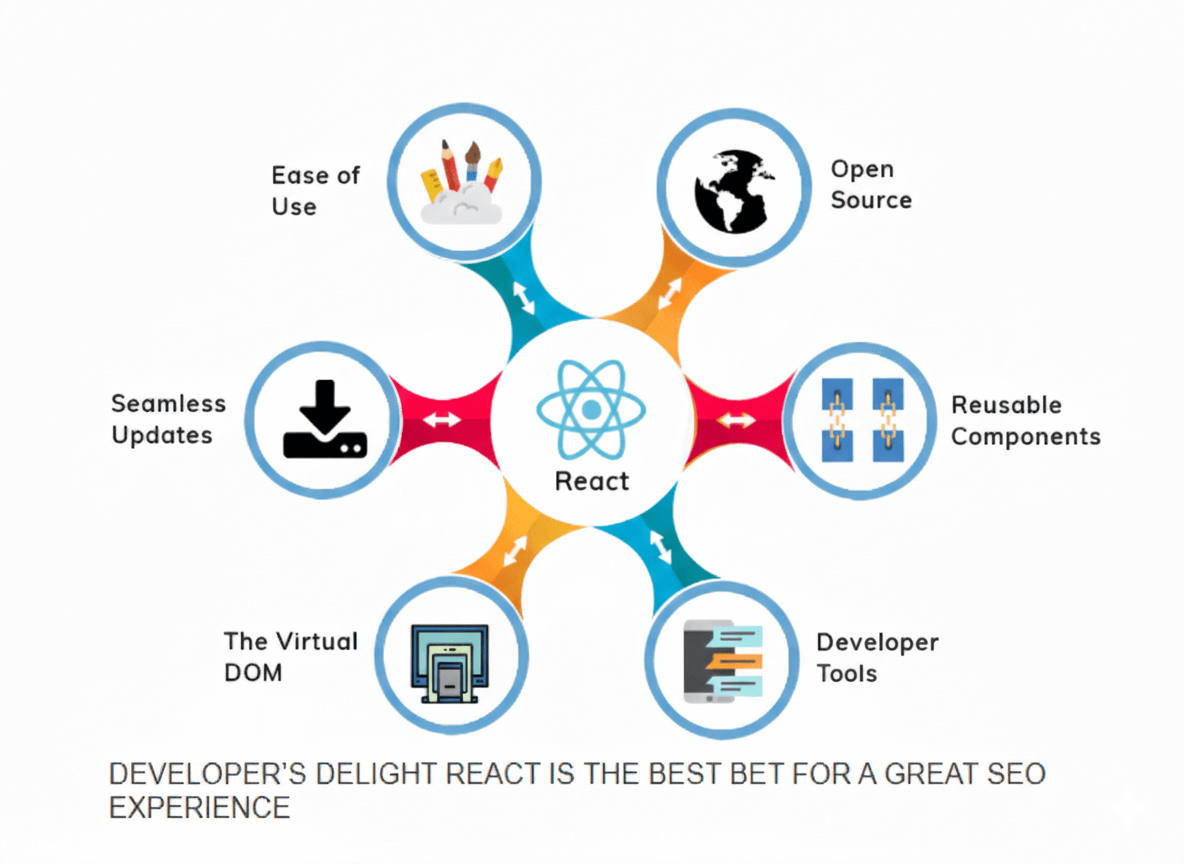
React's component-based architecture remains one of its strongest selling points. React component reusability allows developers to create modular, maintainable code that can be easily shared across projects and teams. This approach significantly reduces development time and ensures consistency across applications.
Unlike other frameworks that lock you into specific patterns, React's flexible component model adapts to various architectural needs. Whether you're building a simple landing page or a complex enterprise application, React's modular approach scales effortlessly.
Developer Productivity and Experience
The React ecosystem advantages extend far beyond the core library. React developer productivity tools have matured significantly, offering an unparalleled development experience. From React DevTools to hot reloading, the entire development workflow is optimized for efficiency.
The learning curve, while present, is gentler compared to more opinionated frameworks like Angular. This accessibility has contributed to React's widespread adoption and the growth of a massive developer community.
React's Revolutionary Technologies Shaping the Future
React Server Components: The Game Changer
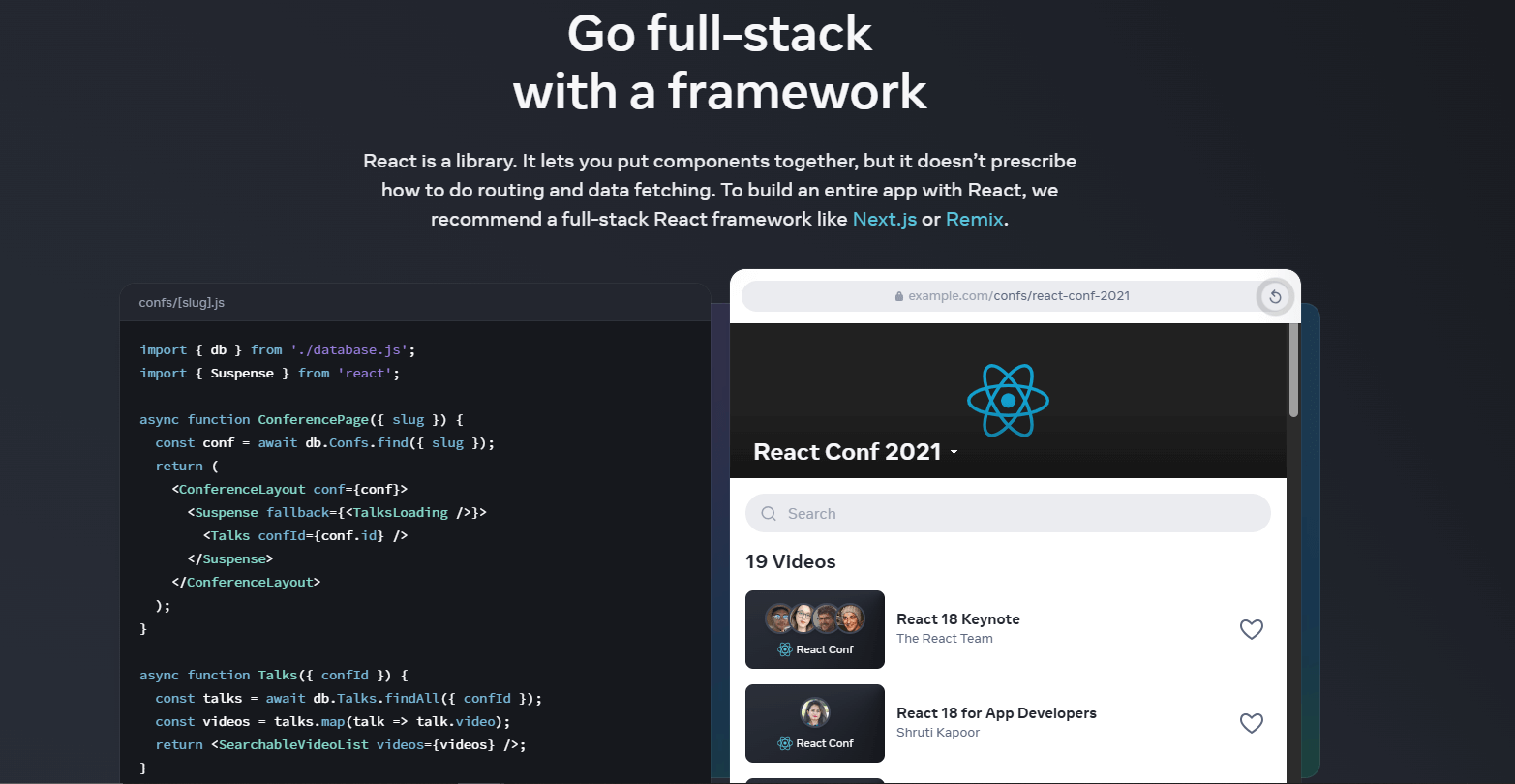
One of the most significant innovations in React's recent evolution is the introduction of React Server Components. This technology represents a paradigm shift in how we think about rendering and data fetching in React applications.
React Server Components benefits include:
- Zero client-side JavaScript footprint: Server Components render entirely on the server, reducing bundle size and improving performance
- Direct database access: Components can fetch data directly without additional API layers
- Improved SEO: Server-side rendering becomes more powerful and flexible
- Enhanced security: Sensitive operations stay on the server
This innovation addresses one of the long-standing criticisms of React: the complexity of server-side rendering and SEO optimization. With Server Components, React SEO friendly applications become the default, not an afterthought.
React Concurrent Mode: Performance Revolution
React concurrent mode advantages represent another leap forward in application performance. This feature allows React to interrupt rendering work to handle high-priority tasks, ensuring that user interactions remain responsive even during heavy computations.
Key benefits include:
- Improved user experience: Applications feel more responsive
- Better resource utilization: React can prioritize important updates
- Smoother animations: Concurrent rendering prevents janky animations
- Enhanced scalability: Large applications perform better under load
React Hooks: Modern Development Paradigm
React hooks modern development has fundamentally changed how we write React applications. Hooks have eliminated many of the complexities associated with class components while providing more powerful and flexible state management options.
The evolution of hooks continues with new additions like:
useIdfor generating unique identifiersuseDeferredValuefor performance optimizationuseTransitionfor managing state transitions- Custom hooks for complex logic abstraction
Integration Excellence: React's Expanding Ecosystem
React TypeScript Integration: Type Safety Meets Flexibility
The React TypeScript integration has become increasingly seamless, offering developers the best of both worlds: React's flexibility and TypeScript's type safety. This combination is particularly important for large-scale applications where maintainability and code quality are paramount.
TypeScript provides:
- Compile-time error detection: Catch bugs before they reach production
- Better IDE support: Enhanced autocomplete and refactoring capabilities
- Improved team collaboration: Self-documenting code through type definitions
- Easier maintenance: Refactoring becomes safer and more predictable
Next.js React Framework 2025: Full-Stack Excellence
The Next.js React framework 2025 continues to set the standard for React-based full-stack development. Next.js has evolved into a comprehensive platform that addresses many of React's traditional limitations while maintaining its core philosophy.
Next.js innovations include:
- App Router: A new routing system based on React Server Components
- Turbopack: A faster, Rust-based bundler for improved development experience
- Edge Runtime: Deploy React applications closer to users globally
- Built-in optimizations: Image optimization, font loading, and more
React WebAssembly Integration: Performance Frontiers
The React WebAssembly integration opens new possibilities for high-performance web applications. This combination allows developers to run computationally intensive tasks at near-native speed while maintaining React's declarative UI paradigm.
Use cases include:
- Game development: Browser-based games with console-like performance
- Data visualization: Complex charts and graphics rendering
- Scientific computing: Mathematical modeling and simulations
- Media processing: Image and video manipulation in the browser
Architectural Innovations: Building for the Future
React Micro Frontends Architecture: Scaling Teams and Applications
React micro frontends architecture has emerged as a solution for large organizations dealing with multiple development teams and complex application requirements. This approach allows teams to work independently while maintaining a cohesive user experience.
Benefits include:
- Team autonomy: Different teams can use different technologies
- Independent deployments: Faster release cycles and reduced risk
- Technology diversity: Gradual migration and experimentation
- Scalable development: Teams can grow without stepping on each other
React State Management Best Practices: Beyond Redux
React state management best practices have evolved significantly, with new tools and patterns emerging to simplify application state management. While Redux remains popular, alternatives like Zustand, Jotai, and React's built-in state management have gained traction.
Modern approaches include:
- Context API with useReducer: Built-in state management for medium complexity
- Zustand: Lightweight state management without boilerplate
- React Query: Server state management and caching
- Atomic state management: Fine-grained reactivity with libraries like Jotai
Performance and Optimization: React's Competitive Edge
React Performance Optimization 2025: Speed and Efficiency
React performance optimization 2025 focuses on both bundle size reduction and runtime performance improvements. The React team continues to invest in making applications faster and more efficient.
Key optimization strategies include:
- Tree shaking: Eliminating unused code from bundles
- Code splitting: Loading only necessary code when needed
- Lazy loading: Deferring component loading until required
- Memoization: Preventing unnecessary re-renders with React.memo and useMemo
React Web App Scalability: Handling Growth
React web app scalability has been proven in production by some of the world's largest applications. The framework's architecture naturally supports scaling both in terms of application complexity and team size.
Scalability features include:
- Component composition: Building complex UIs from simple components
- Virtual DOM optimization: Efficient updates and rendering
- Concurrent features: Better resource utilization at scale
- Development tools: Profiling and debugging tools for large applications
The Mobile-First Future: React's Cross-Platform Dominance
React Mobile First Development: One Codebase, Multiple Platforms
React mobile first development has been revolutionized by React Native and the broader React ecosystem. The ability to share code between web and mobile applications provides significant advantages in terms of development efficiency and maintainability.
Advantages include:
- Code sharing: Common business logic across platforms
- Skill transferability: Web developers can build mobile apps
- Consistent user experience: Similar patterns across platforms
- Faster development: Reduced time to market for mobile applications
Industry Adoption and Future Outlook
Why React is Best Framework: Industry Validation
The question of why React is best framework is answered by its widespread industry adoption. Major companies continue to choose React for their most critical applications, validating its enterprise readiness and long-term viability.
Success stories include:
- Netflix: Streaming interface and content management
- Airbnb: Booking platform and host management
- Uber: Driver and rider applications
- WhatsApp: Web interface and business tools
React JavaScript Framework Future: Innovation Pipeline
The React JavaScript framework future looks bright with continuous innovation and community support. The React team at Meta continues to invest heavily in the framework's development, with regular updates and new features.
Upcoming innovations include:
- React Forget: Automatic memoization compiler
- Enhanced Suspense: Better loading and error states
- Improved DevTools: Better debugging and profiling
- Performance optimizations: Continued focus on speed and efficiency
Conclusion: React's Unshakeable Position as the Future
As we've explored throughout this comprehensive analysis, React's position as the future of web development is built on solid foundations: technical excellence, ecosystem maturity, industry adoption, and continuous innovation. The combination of React Server Components, concurrent features, TypeScript integration, and the broader ecosystem creates a compelling platform for building the web applications of tomorrow.
The React ecosystem's ability to adapt to changing requirements while maintaining its core principles ensures that investments in React knowledge and applications will continue to pay dividends. Whether you're a developer looking to advance your career, a startup building your first application, or an enterprise planning your next major project, React represents not just a safe choice, but the optimal choice for web development in 2025 and beyond.
The future of web development is React, and that future is already here. The question isn't whether to adopt React, but how quickly you can leverage its powerful capabilities to build the next generation of web applications.
Ready to start your React journey? Begin by exploring the official React documentation and building your first component. The future of web development awaits, and React is your gateway to that future.